
My Own Library
Prologue
I’ve cited or quoted from many books in my essays. And I spend a lot of time reading books to be able to write these essays. So I figured that it’s worth providing a glimpse into my own library at home. I don’t overshare photos online as a matter of privacy. But this essay will show some pictures of my books for anyone curious about what I read. You won’t see images of me though, since it’s all about the books—nothing more, nothing less.
Writing Guides
Here are the main books on my shelf that have taught me the most about writing and language.
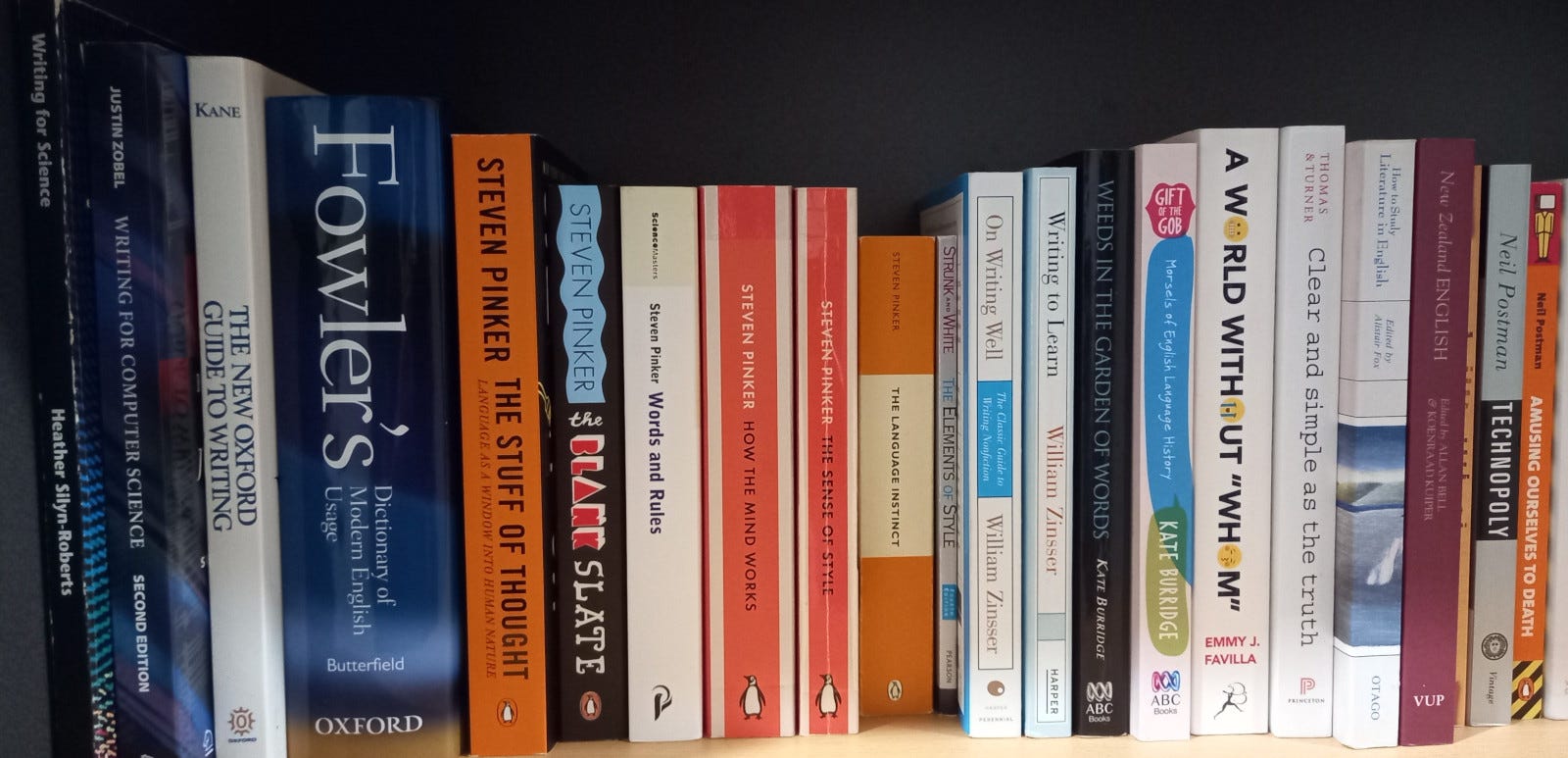
Back in the year 2000, I relied on the pragmatic advice of Heather Silyn-Roberts to get through my first year as an undergraduate at the University of Auckland. You can see her book Writing for Science (1996) on the left-hand edge of the picture above, which I have proudly possessed for more than a quarter of this century. Writing was not fun for me back then, and it’s never been a natural talent of mine. Her book helped me for the remainder of my degree. When I subsequently did a PhD at the University of Melbourne during the early 2010s, I benefited from Justin Zobel’s excellent guide Writing for Computer Science (2005, 2nd ed.). It also helped that Zobel was a professor in my department, as I enjoyed his course on research methods. Doing the research and solving a tough problem is the hardest part, then writing up results can be somewhat easier than anticipated.
I first read The Elements of Style (2000, 4th ed.) by Strunk & White around ten years ago. It’s a legendary little book, of course. I now read it once a year to recall the important rules. Steven Pinker’s books on language and psychology are always enjoyable, especially his take on writing guidelines in an enlightening book called The Sense of Style (2014). You can see Neil Postman’s books on the right-hand edge of the picture above. Postman’s command of clear and concise language is inspiring. I peruse random pages of his books if I need a mental cadence that pushes me past the dreaded writer’s block. Also note the two books by Kate Burridge, whose exposition of the history and subtlety of English words is delightful to read on any day of the week.
Technical Textbooks
Having been a computer engineer for more than twenty years, my bookshelves are full of volumes on all things related to hardware, software, mathematics, physics, etc. Here are just some of the technical textbooks nearest to my desk currently, since I reach for these more often than the rest.
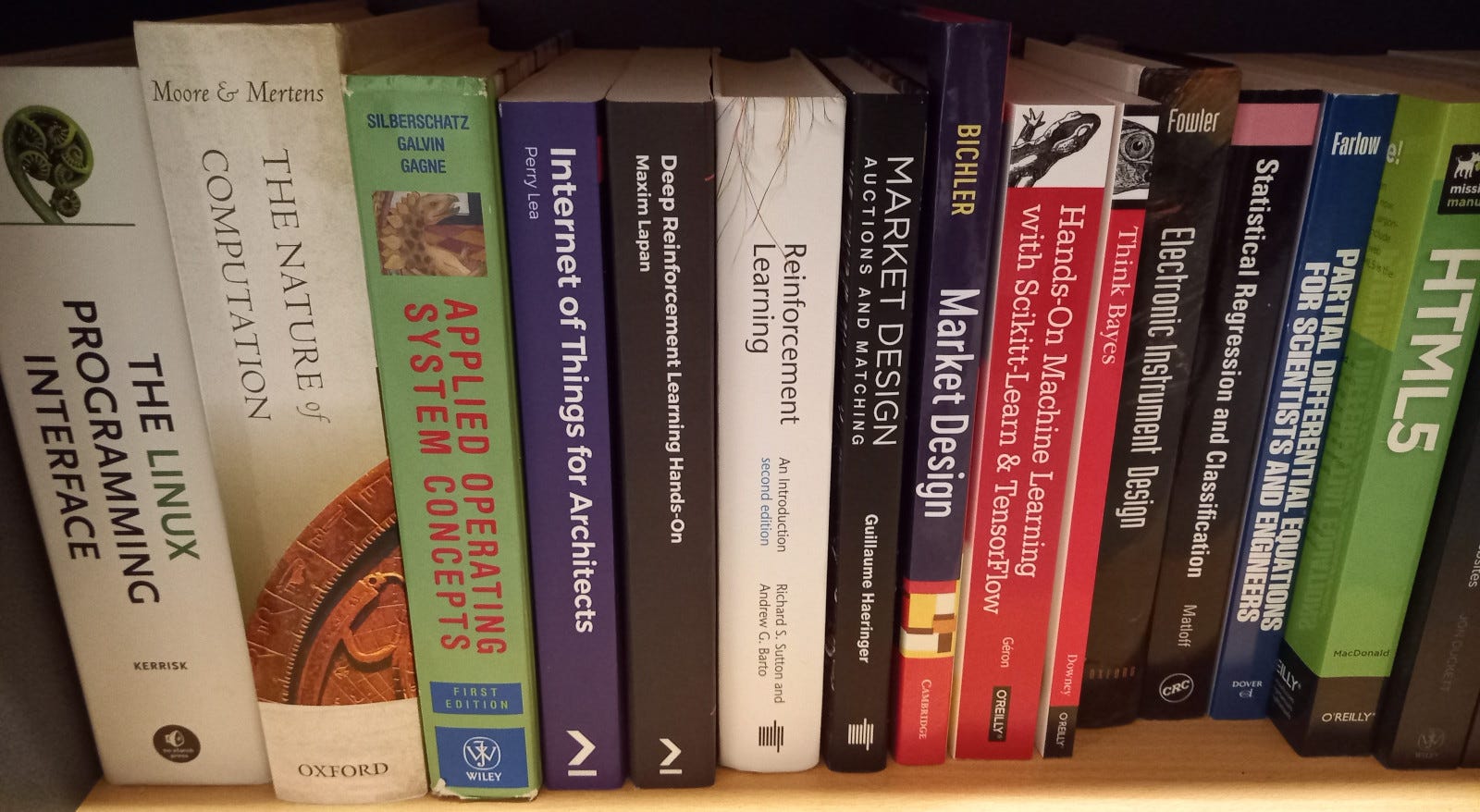
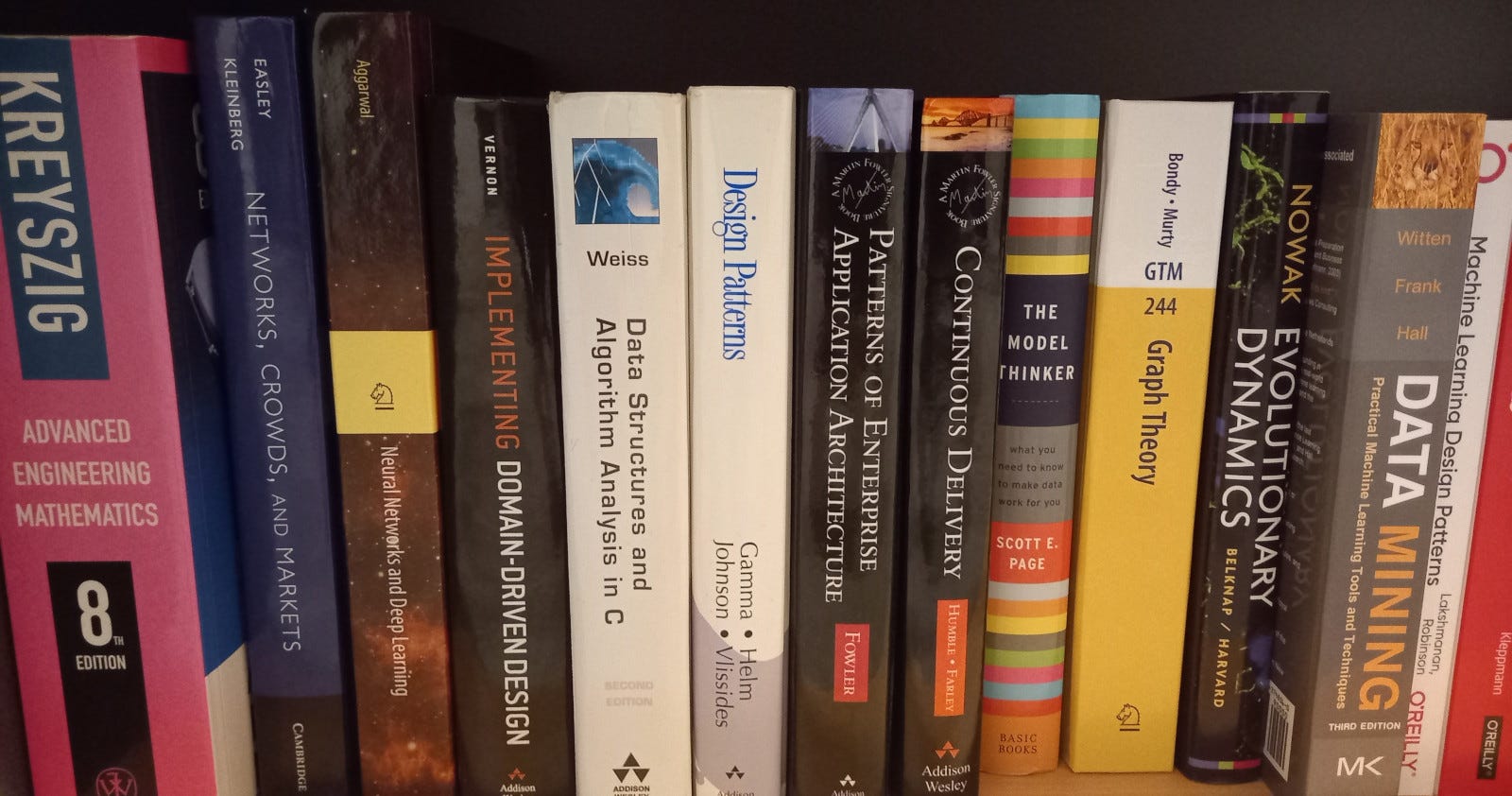
I strongly recommend the book by Scott E. Page, as well as the one by Easley & Kleinberg. These two books are superb guides for thinking correctly about our connected world. Also, the book titled Design Patterns (1995) is a classic, and it ought to be a must-read for vibe coders.
Penguins Galore
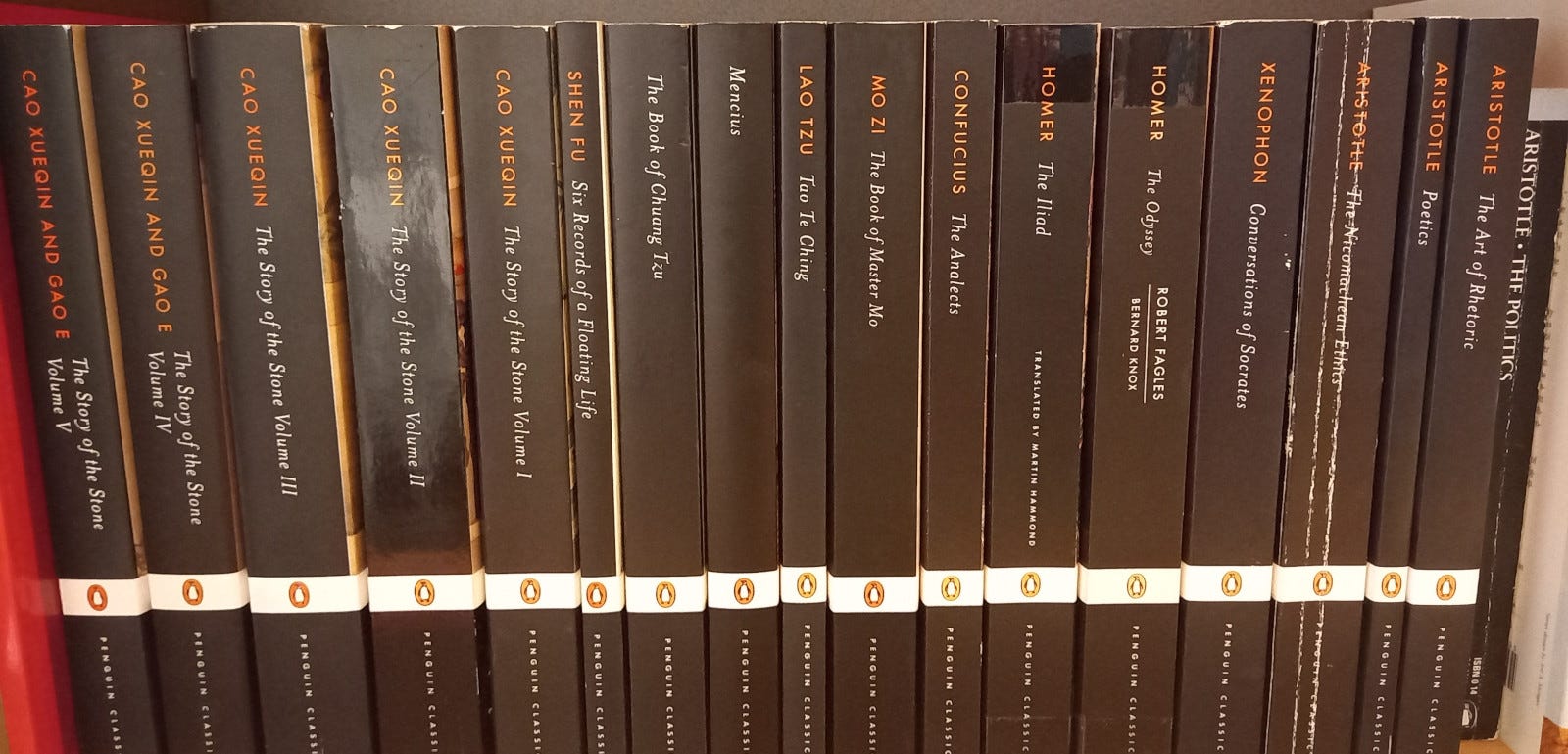
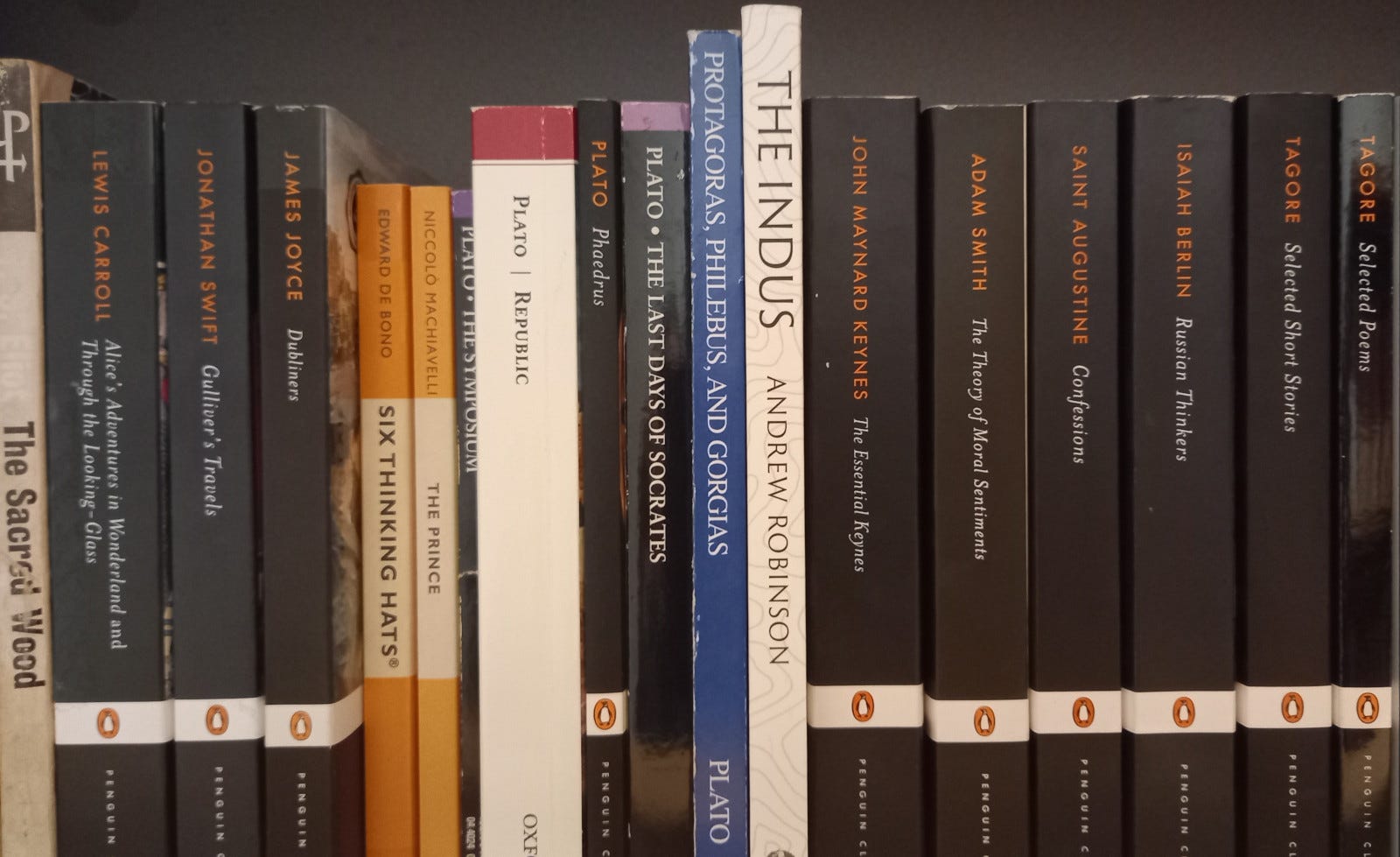
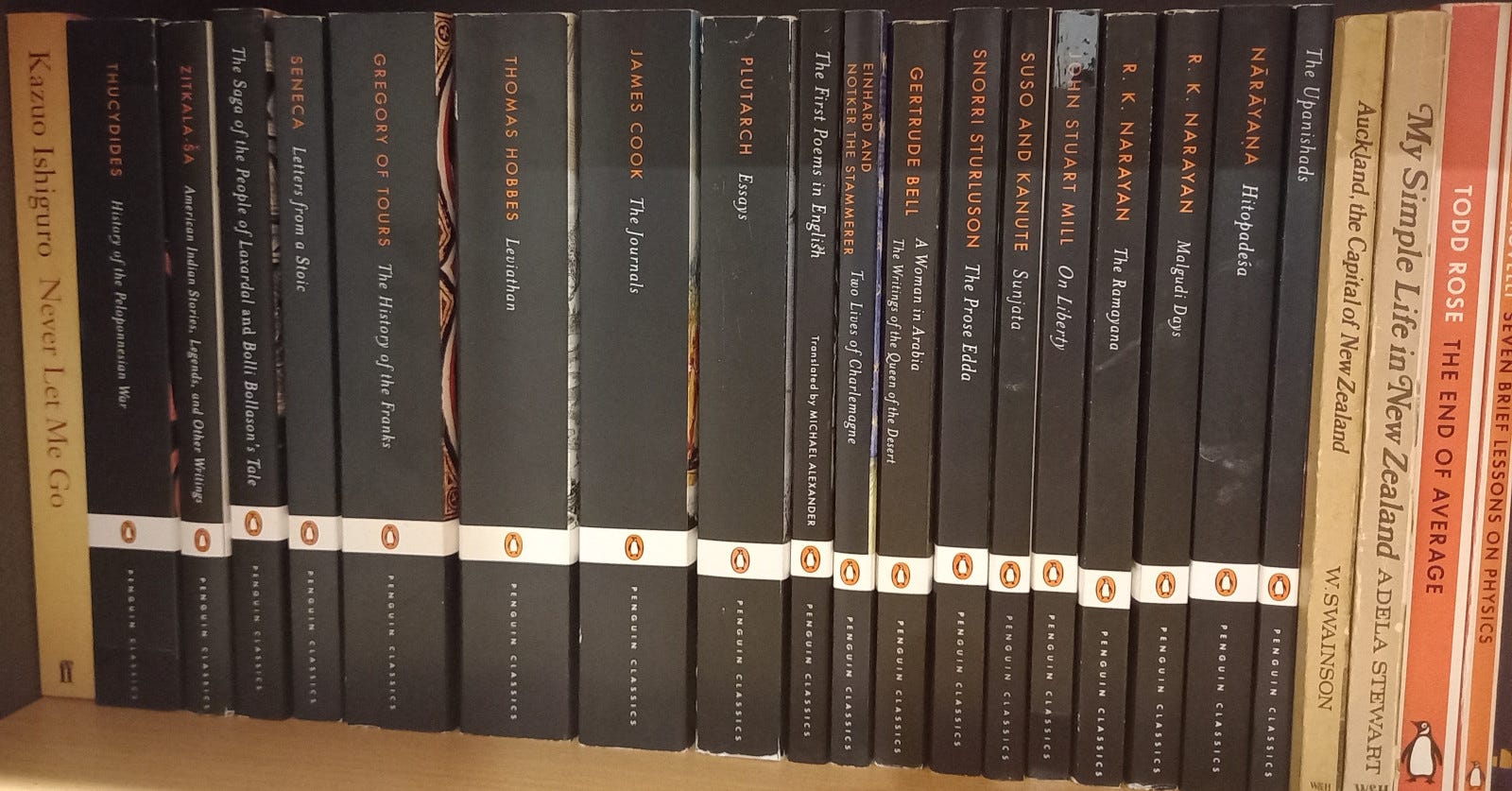
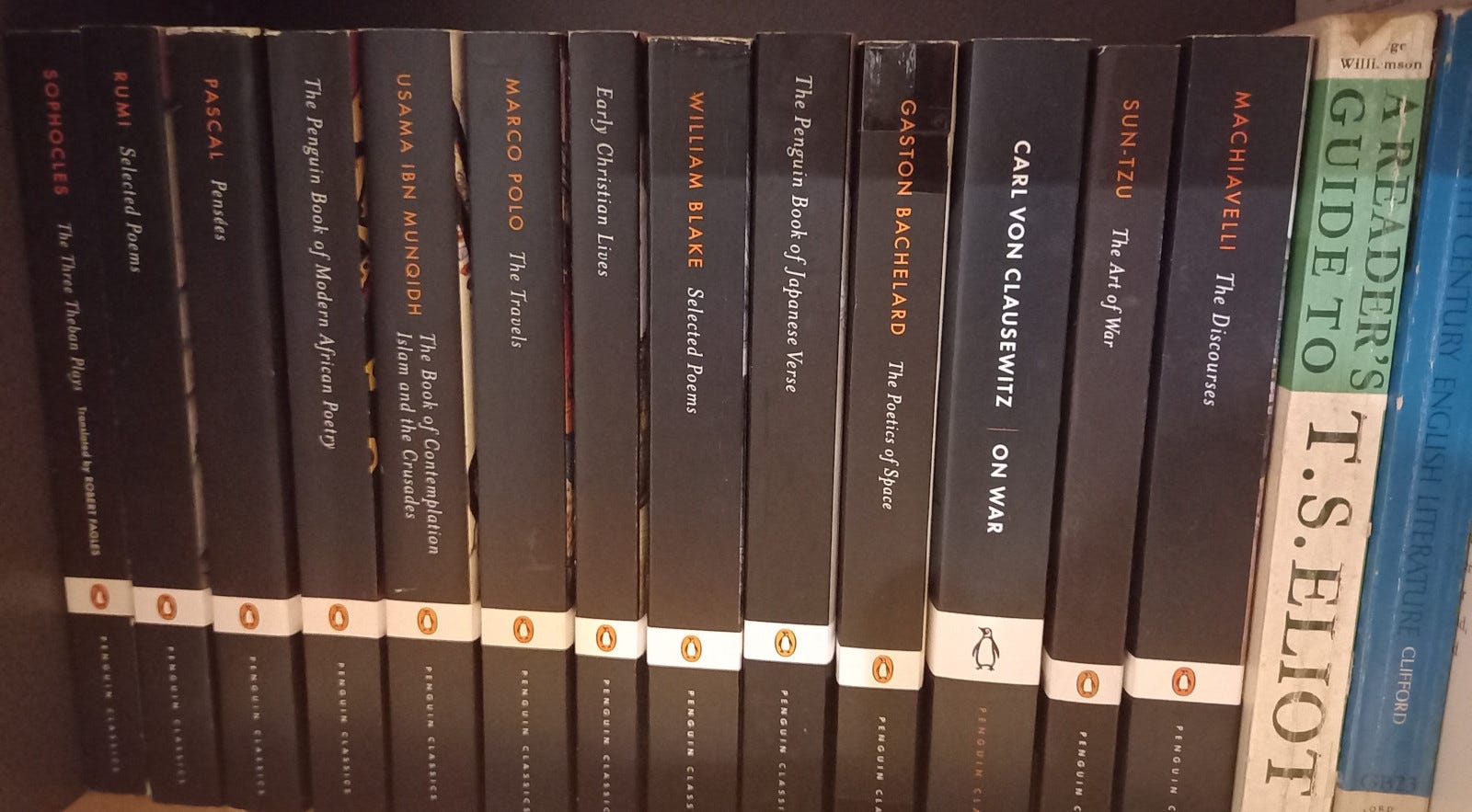
Who doesn’t like Penguins? I mean the books from a famous publisher, of course. I’ve amassed hundreds over the past quarter century. Here’s a small sample of the Penguins that I read.
Coffee-Table Favourite
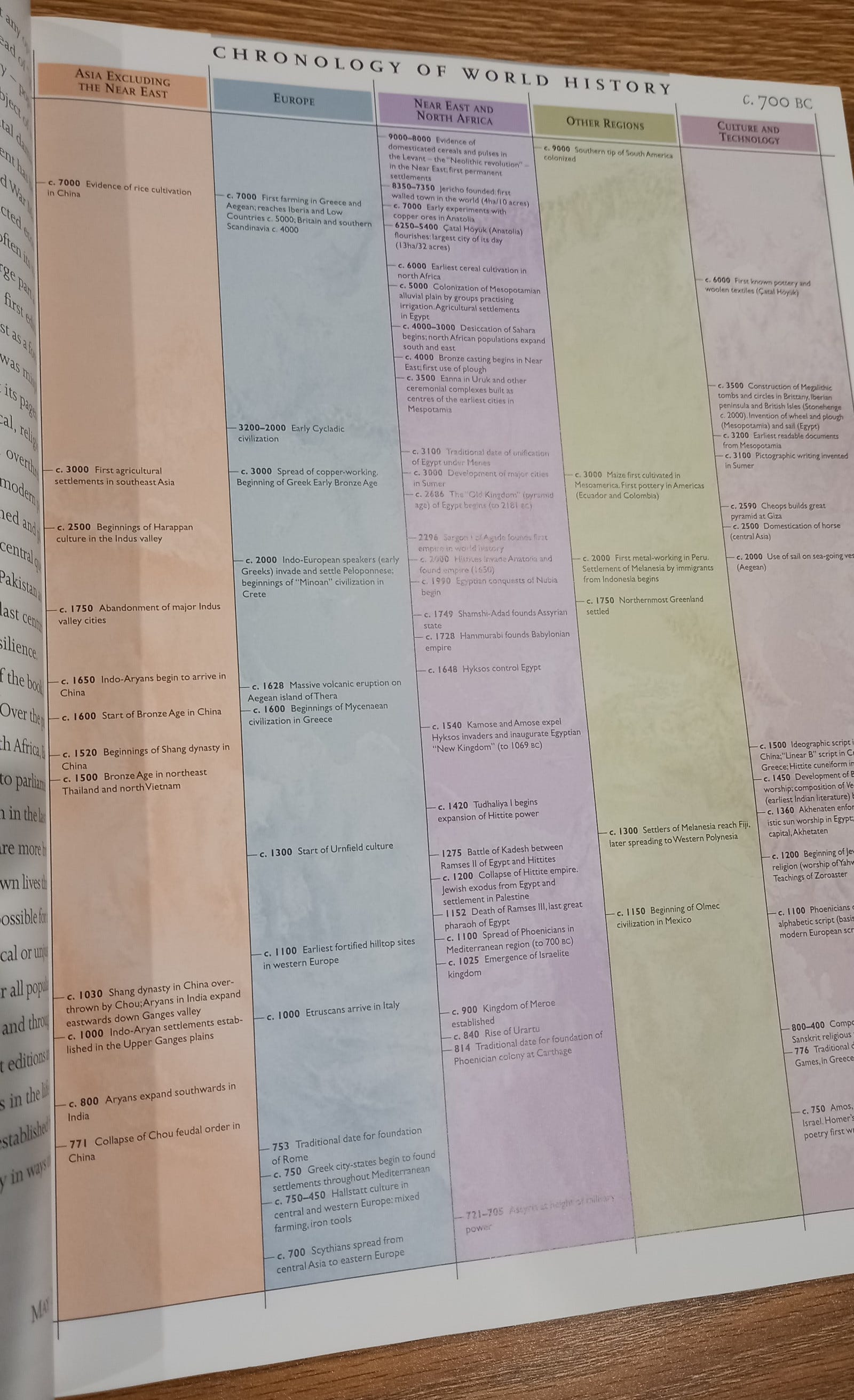
I’m a proud history buff. Hence I have a relevant book on pretty much every topic of history. And the biggest of them all sits on my coffee table as I browse it everyday. It’s literally the biggest book I own, given that its dimensions are 36 cm by 27 cm by 3 cm. I reckon the size befits the topic.
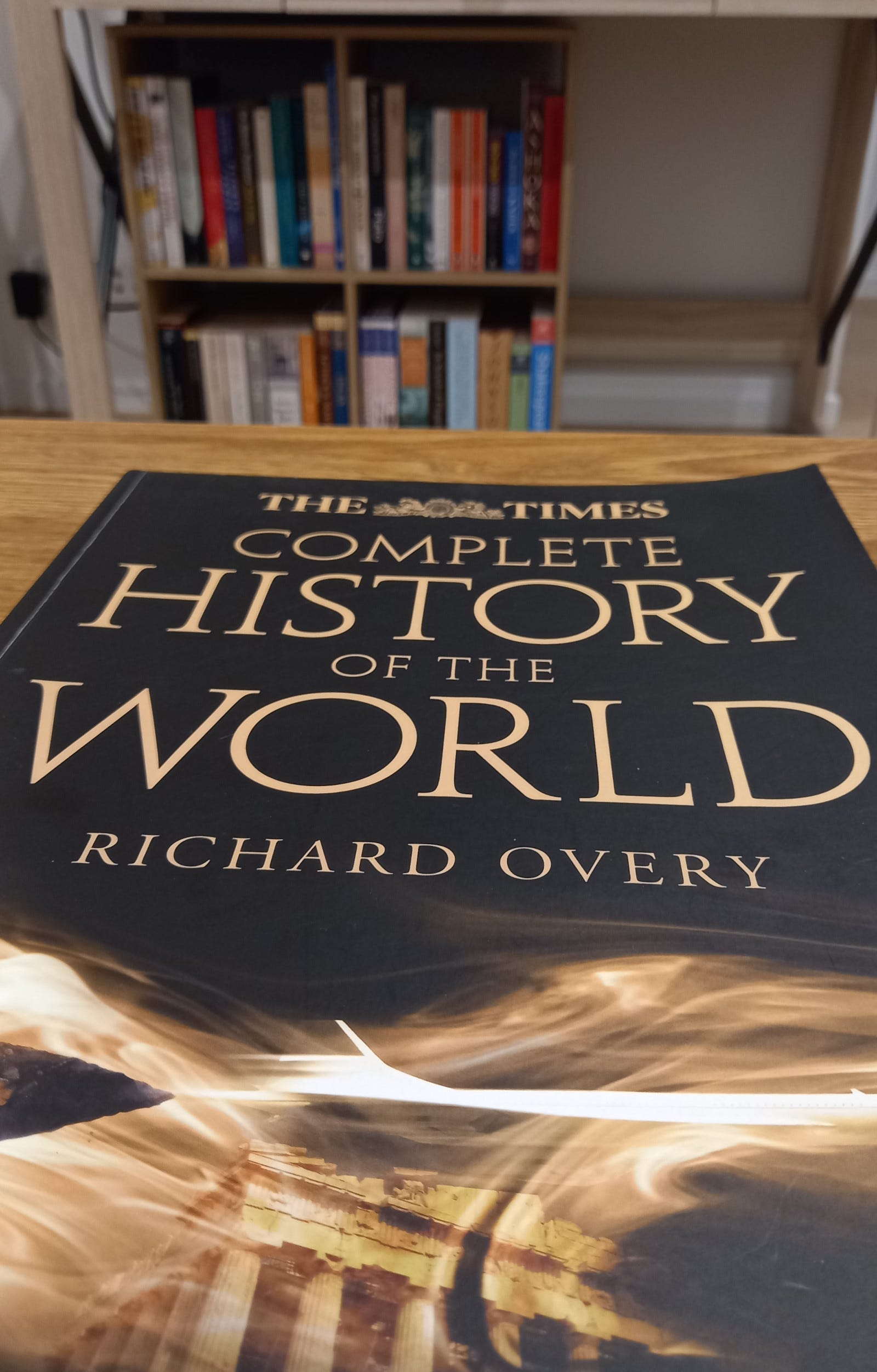
I love the parallel chronology laid out on the large page that you can see below. I’m a pedantic stickler for correct dates and timelines. That’s why you’ll see me cite the publishing year of a book as much as possible. This volume edited by Richard Overy is from 2010, by the way.
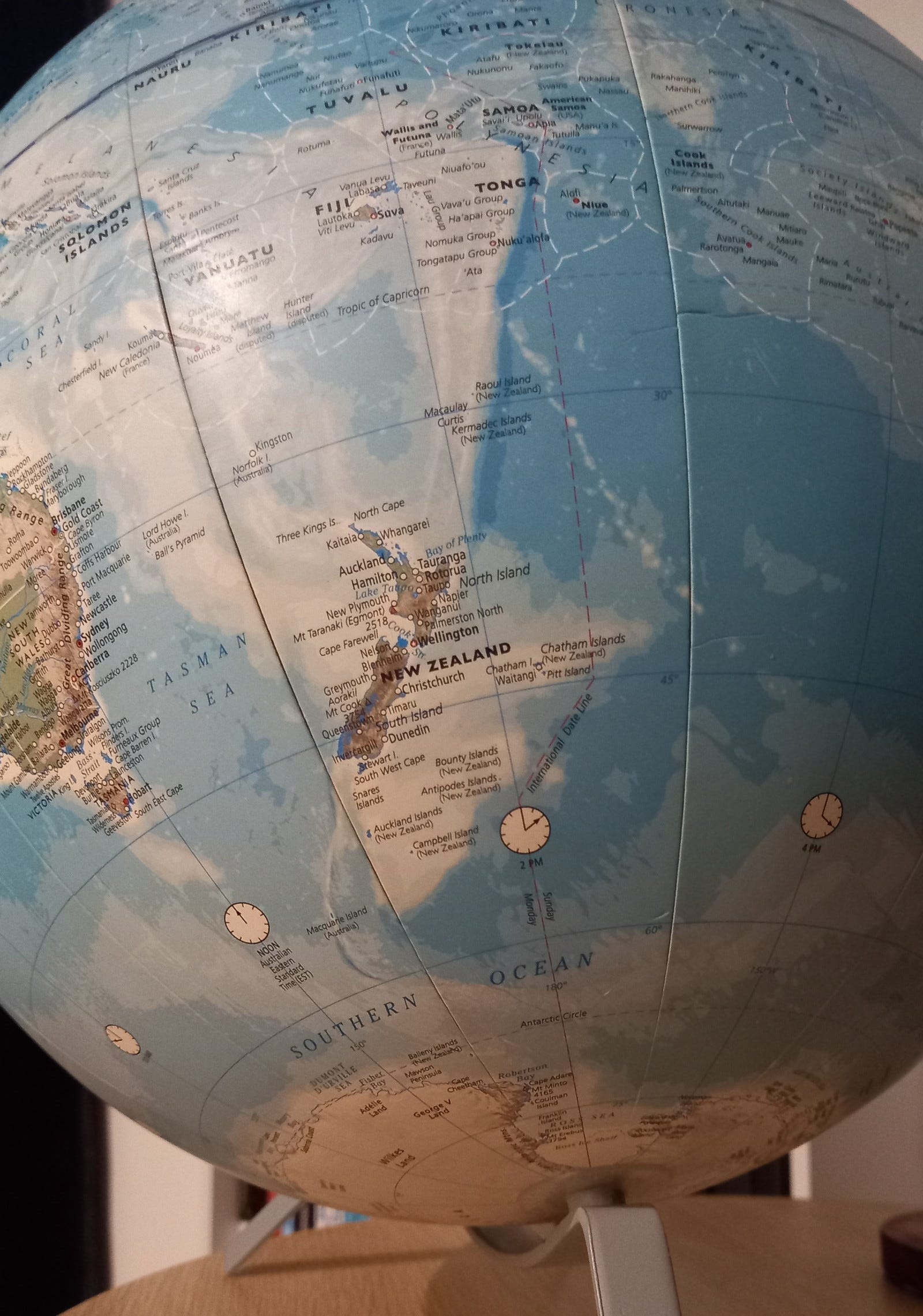
And to complement my fascination with world history, I also keep a large globe on my coffee table. I prefer to visualise world history in the context of the whole world that I can see in front of me. It’s amazing how intuitive geography really is—after you become accustomed to looking at a rotating globe, rather than a flat map based on the misleading Mercator projection.
My Theses
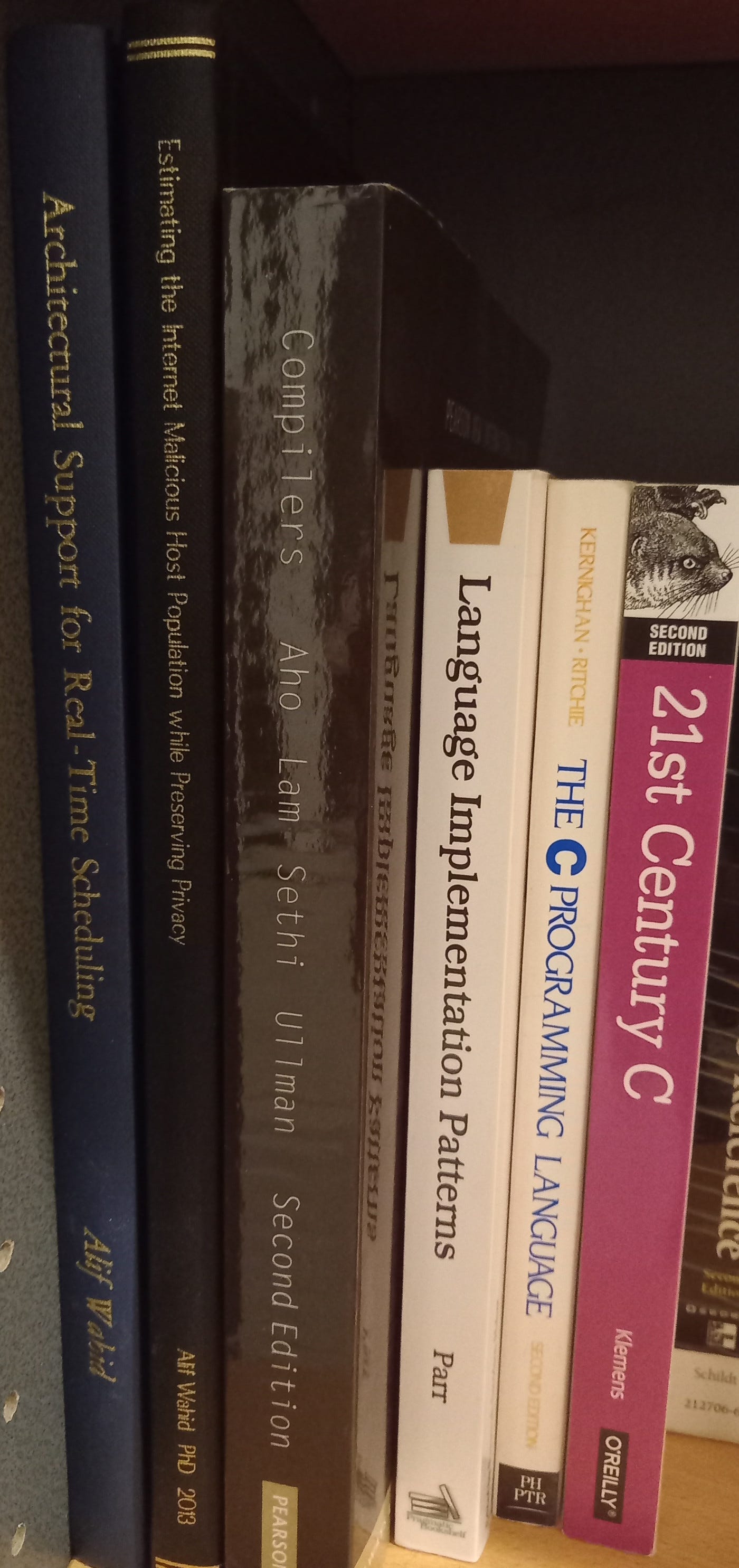
My Masters and PhD theses are visible in the picture below. Unfortunately, I seem to have lost the soft-copy of my Masters thesis. But my PhD thesis is openly accessible to everyone. By the way, the adjacent books about compilers and C programming are fantastic. Certainly worth reading.
Epilogue
Many people fondly cherish the first album they ever bought. Some folks relish their first phone. Others recall their first paycheck. I remember the first book which I bought with my own money. Actually, it was a voucher that I won at school, which still counted as money to me. Back in the dial-up days of 1998, I had to get myself the one and only book below.
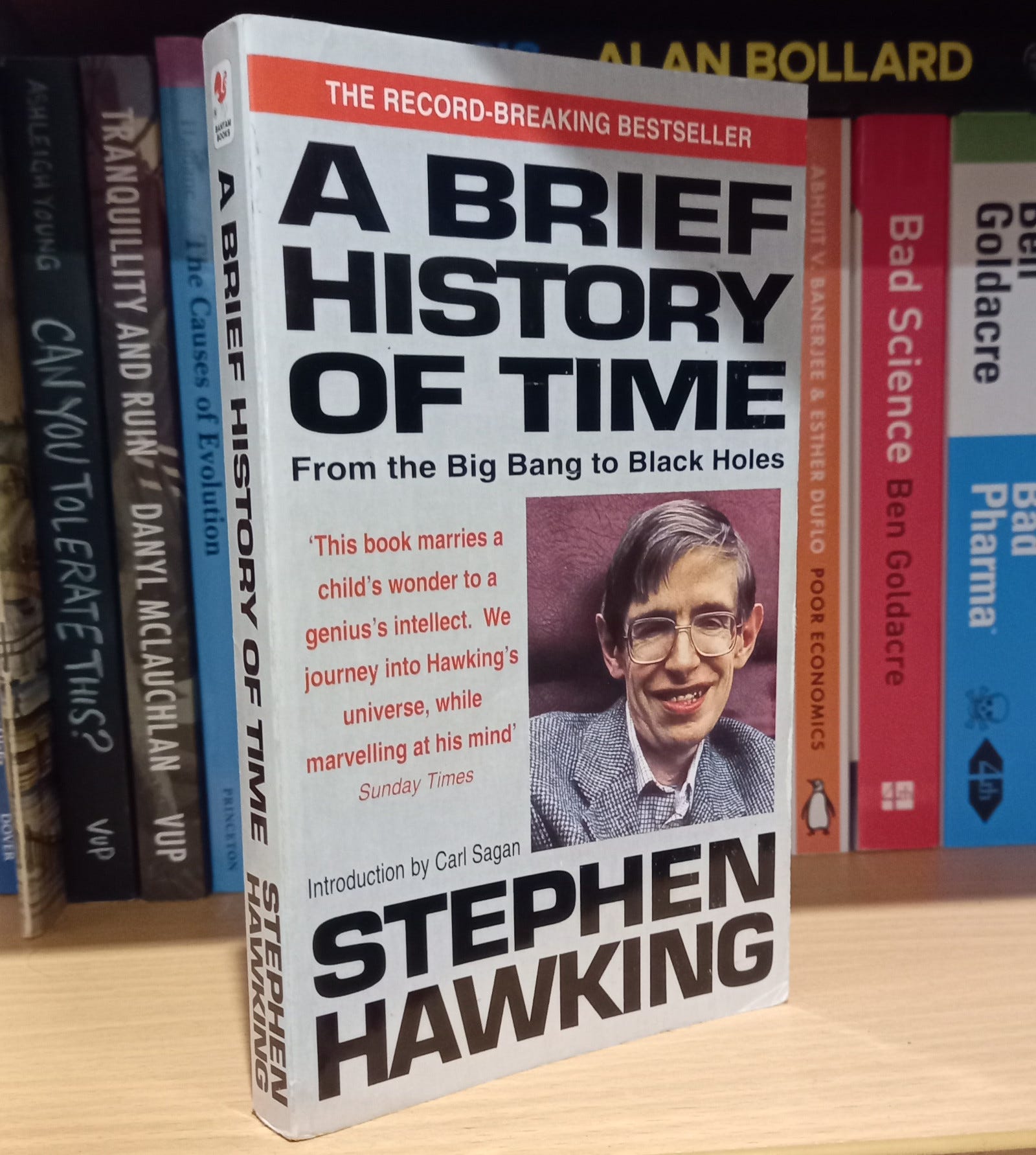
Reading this immortal book again, Hawking’s conclusion still fires up the imagination nearly thirty years later: “if we do discover a complete theory, it should in time be understandable in broad principle by everyone, not just a few scientists. Then we shall all, philosophers, scientists, and just ordinary people, be able to take part in the discussion of the question of why it is that we and the universe exist. If we find the answer to that, it would be the ultimate triumph of human reason—for then we would know the mind of God.” Indeed, I cannot do better than to end with what he said.